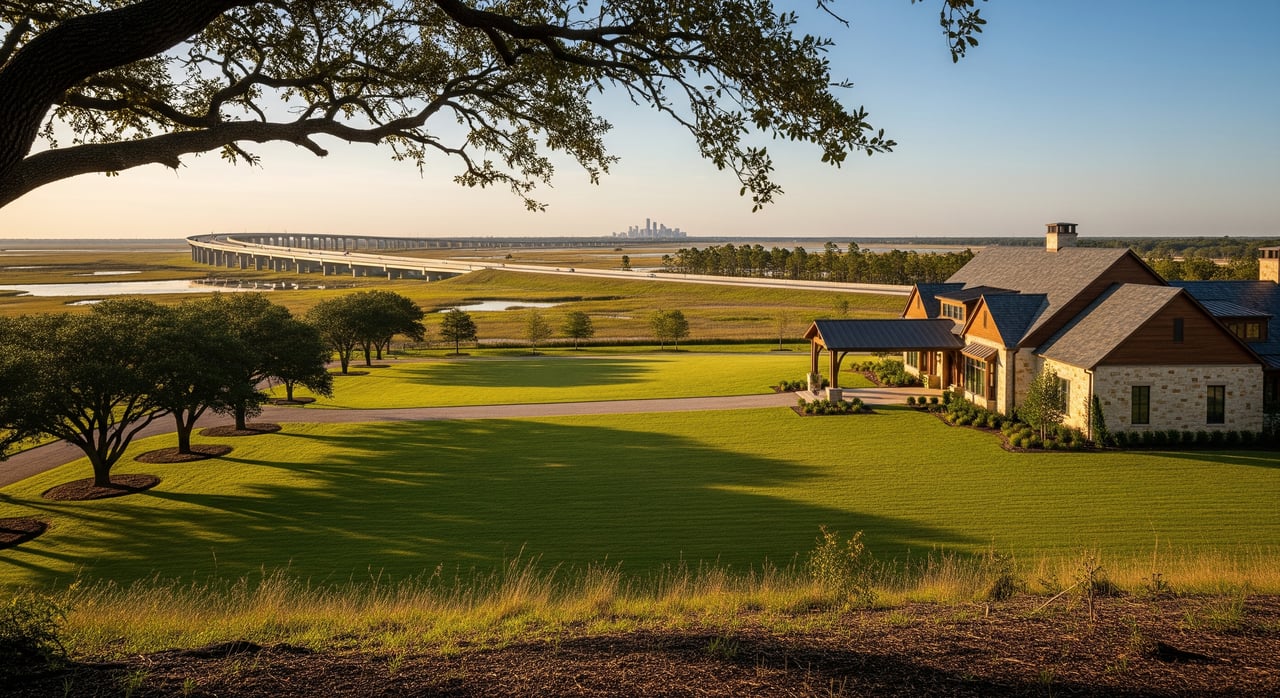
What if one highway could redraw where people live, work, and invest around Houston? If you live in Baytown or eastern Harris County, you are already seeing how State Highway 99, the Grand Parkway, is changing everyday routes and opening up new land along the outer edge of the metro. In this guide, you will learn how SH 99 influences development, commutes, and property values, plus what to watch if you are buying a home or evaluating acreage. Let’s dive in.
The Grand Parkway in plain terms
SH 99 is a multi‑segment outer loop designed to improve circumferential mobility around the Houston region. Segments have been built in phases, with a mix of tolled and non‑tolled sections, and more are planned or under construction. As segments open, you tend to see new plats, rezoning requests, and builder announcements nearby.
For Baytown and eastern Harris County, SH 99 creates alternative links to major corridors and other exurban counties. That changes how commuters choose their routes and how freight moves, and it usually raises interest in land near interchanges. The effect shows up first where access improves the most.
Where growth shows up first
Residential near new access
New interchanges create an accessibility premium for nearby parcels that once felt remote. Builders often focus within a 5 to 10 minute drive of a new interchange for initial subdivisions or planned communities. Early neighborhoods may feature larger lots and amenity packages, then infill later tightens the pattern as population grows.
The pace depends on basics like floodplain constraints, drainage, and whether public sewer is available. School capacity planning also influences timing for larger projects. You can expect residential plats and speculative lot purchases to track visible construction milestones.
Warehouses and light industrial
Improved ring access draws warehouse and distribution sites to interchanges that connect quickly with I‑10, the Ship Channel, and rail. Large parcels of 20 acres or more close to ramps are attractive for regional facilities and contractor yards. Industrial uptake often spurs upgrades to utilities, including power and water, which can then support other uses nearby.
If you own acreage near a node with fast highway connections, your land may fit this demand profile. Utility capacity, truck routing, and environmental permitting will shape feasibility. These projects can lead retail and housing in early years.
Retail and daily services
Convenience retail typically arrives first at interchanges. Fuel stations, quick‑service restaurants, and small grocery formats follow the initial rooftops and traffic counts. Larger centers need more population and infrastructure, so they trail by a few years.
General office demand is usually light in exurban nodes without a major anchor employer. Professional and personal services tend to follow once there are enough local households and workers to support them.
Commute sheds and drive times
What improves
By adding a circumferential option, SH 99 expands the drive‑time catchment for many job centers. You may find new 30, 45, and 60‑minute commute possibilities to Downtown, the Medical Center, the Energy Corridor, Westchase, and Ship Channel industrial parks. Some drivers use the Parkway to bypass core congestion and reach lateral destinations faster.
Keep in mind that added capacity can attract more driving and new development over time. That can reintroduce congestion as a corridor matures. Travel savings depend on your origin, destination, and time of day.
How to test your commute
- Check peak and off‑peak drive times from your preferred SH 99 interchange to your job center.
- Run multiple routes that mix SH 99 with I‑10, SH 146, and other connectors.
- Test on your actual work schedule to account for directional traffic.
- If you plan a hybrid schedule, confirm that two or three longer days per week are acceptable for your household.
Mapping layers to review
If you are evaluating a neighborhood or acreage, review map layers that clarify both access and constraints. Helpful layers include drive‑time isochrones, traffic counts, and recent plats within 1 to 2 miles of interchanges. Add floodplain maps, wetlands, and utility service boundaries, since those often determine what you can build and when.
Commuter flow data can also show how residents are connecting to jobs before and after segment openings. Traffic volumes and segment status updates help you understand current use and upcoming changes.
Baytown and East Harris nodes to watch
Interchanges in and around Baytown and eastern Harris County are key to how growth distributes. Nodes to keep on your radar include:
- SH 99 with SH 146, serving the Baytown corridor and connections toward Chambers County.
- SH 99 with I‑10 near the east‑west corridor, where ring access meets a major interstate.
- SH 99 with US‑90 and nearby links that improve east‑west movement.
- Connections toward Beltway 8 and SH 225 that matter for both commuters and freight.
Always confirm current interchange status and project timelines before you make a location‑dependent decision. Segment deliveries are phased and each node can progress on a different schedule.
Buyer takeaways in Baytown’s fringe
Different buyer groups value SH 99 access for different reasons. Here is how to frame your search.
First‑time buyers seeking affordability
You may be able to trade a longer commute for more space and value per square foot. Focus on subdivisions within a short drive of an interchange that also offer reliable utilities. Plan a grocery and medical access check so daily needs are covered.
Move‑up or family buyers
If you want a larger yard or community amenities, target master‑planned areas that align with your commute tolerance. Ask your agent to review builder track records and future phases. Keep school capacity discussions factual and confirm enrollment boundaries directly with the district.
Remote or hybrid workers
A few longer commutes per week may be worth the trade for a home office and more land. Verify broadband availability by address, not just by zip code. Also note nearby cafés or co‑working options if you want a change of scenery during the week.
Retirees and lifestyle relocators
Quieter neighborhoods and larger lots can be appealing along the outer loop. Balance that with access to medical services and your preferred activities. If family visits are frequent, test drive‑times to their side of town.
Land and investor insights
SH 99 often triggers parcelization of agricultural tracts as owners sell or subdivide. If you are evaluating acreage, timing and infrastructure will drive your outcome. Consider these points:
- Industrial‑adjacent sites near interchanges can attract early users, especially with 20 acres or more and strong utility access.
- Retail pads can be viable once traffic counts climb and rooftops appear, often before large shopping centers.
- Residential land values hinge on floodplain position, drainage plans, and whether public sewer is available. Septic can limit density and pace.
- Zoning and planned development requests may increase near certain nodes. Track local permitting activity to gauge momentum.
Investors should pair growth potential with risk controls. Utility capacity, environmental permitting, and neighborhood feedback can affect feasibility and timing.
Risk and due diligence in east Harris County
Baytown and eastern Harris County include meaningful flood risk areas. Review FEMA floodplain maps and local drainage plans early in your process. Budget time for engineering and mitigation if a portion of the property lies within a mapped flood zone.
The proximity of petrochemical facilities can influence site selection for some residential buyers. Map industrial buffers and consult local emergency management resources if you have specific concerns. For any property, include environmental and utility reviews in your standard diligence checklist.
Sewer service is a major gating item for medium‑ and higher‑density housing. Confirm municipal utility district or city service boundaries and capacity, not just line locations. For off‑grid or septic properties, understand spacing, soil, and maintenance requirements before you commit.
How we help you navigate SH 99 markets
Choosing the right property along the Grand Parkway takes local knowledge and a land‑first lens. Our team pairs farm and ranch expertise with exurban residential and commercial know‑how across the Houston region. We focus on clear communication, accurate valuation, and a marketing‑first approach that reaches both local and out‑of‑area buyers.
Whether you are buying a home near a new interchange, selling acreage with development potential, or evaluating a logistics site, we can help you make a confident decision. If you are ready to talk through options in Baytown, eastern Harris County, or along the SH 99 corridor, connect with the team at Coldwell Banker Properties Unlimited.
FAQs
When will SH 99 be complete near Baytown and East Harris County?
- Segment deliveries are phased, so check official project pages for current status and timelines before making location‑dependent decisions.
Will living near SH 99 shorten my commute to major job centers?
- It can, especially for lateral trips, but savings depend on your route, time of day, and whether the Parkway lets you bypass core congestion.
Is land near SH 99 a good investment in eastern Harris County?
- Access and growth potential are strong near interchanges, but weigh flood risk, utility capacity, environmental permitting, and project timing.
How fast will grocery, schools, and medical services arrive after new segments open?
- Convenience retail comes first, then larger services as population reaches thresholds and utilities expand to support bigger projects.
What should I verify before buying acreage near SH 99 in Harris County?
- Confirm floodplain status, drainage, sewer or septic feasibility, traffic access, and nearby plats or permits that affect future land use.
Are there environmental considerations for homes near Baytown’s industrial areas?
- Yes. Map industrial buffers and review local hazard and emergency management resources as part of your due diligence.
How can I evaluate commute options from Baytown using SH 99?
- Test 30, 45, and 60‑minute drive‑times to your job center at peak and off‑peak, and compare SH 99 routes with I‑10, SH 146, and Beltway connectors.
What drives early industrial development around SH 99 interchanges?
- Large sites with fast highway access and adequate utilities tend to lead, followed by supporting retail and then broader housing options.