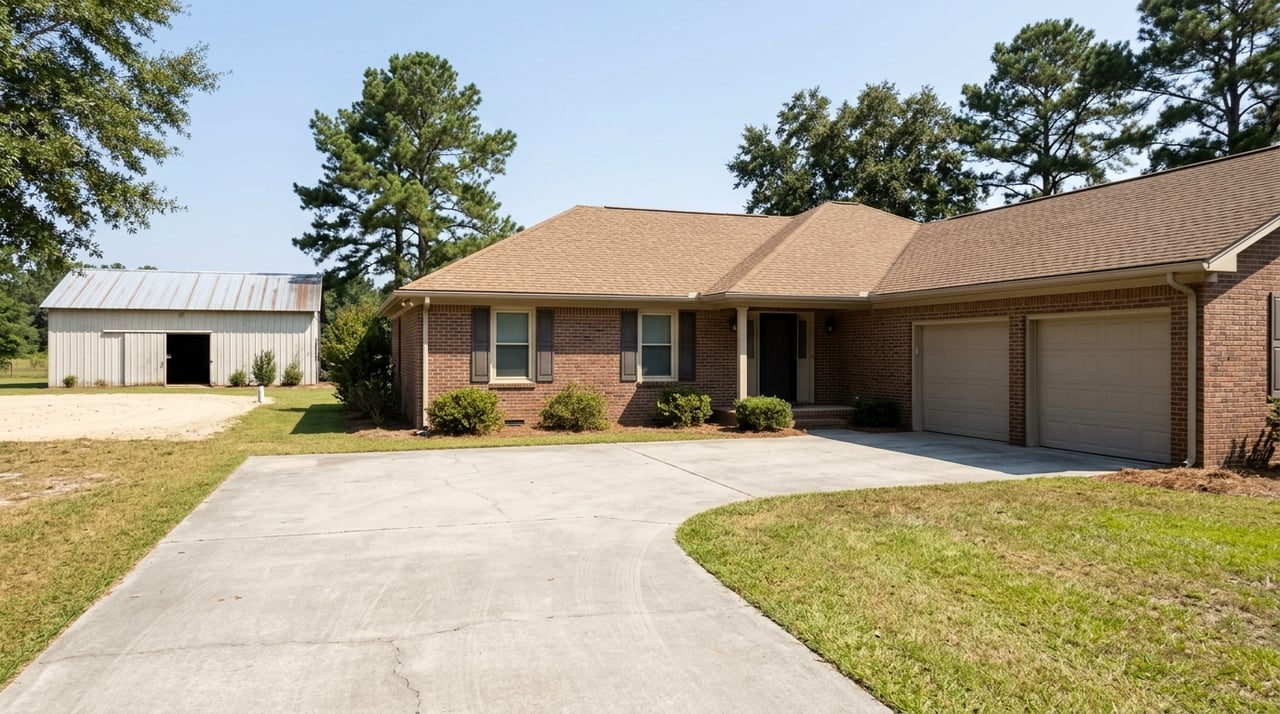
Buying horse property around Montgomery, TX can feel exciting right up until the details get complicated. A pretty piece of land may look perfect at first glance, but horse-ready property depends on much more than a scenic view or a fence line. If you want a place that truly works for your horses and your day-to-day routine, you need to know what to check before you buy. Let’s dive in.
Focus on usable horse acreage
When you shop for horse property, total acreage only tells part of the story. What matters more is how much of that land is actually usable once you account for setbacks, drainage, trees, fencing, stalls, storage, and manure space.
Texas A&M AgriLife notes that facility layout affects horse health and daily care. That means a smaller tract may still work well if the space is planned properly, while a larger tract may be less functional if wet areas, poor layout, or access issues limit how you can use it.
Pasture quality matters too
A grassy tract is not automatically horse-ready. AgriLife describes forage as the foundation of the equine diet and recommends forage evaluation and testing, so it is important to look at whether the land can realistically support turnout under your management plan.
As you walk a property, think beyond appearances. Ask yourself how many horses you plan to keep, how the pasture is being used now, and whether the ground conditions support your intended setup.
Safe fencing is part of the property
Fencing should do more than mark a boundary. Texas A&M veterinary guidance says the safest fence depends on the type of horses, the size of the property, the number of horses, and how they are grouped.
You want fencing that helps prevent horses from getting heads or feet through openings and that is tall enough to discourage jumping. If fencing will need major updates, that should be part of your budget and negotiations.
Check infrastructure early
It is easy to fall in love with a view, a stand of trees, or a quiet road. But on rural and semi-rural property around Montgomery, infrastructure can make or break the purchase.
Many tracts in Montgomery County depend on private wells and on-site sewage systems. That means you should confirm water source, septic feasibility, and utility access before you get too far down the road.
Wells and septic need verification
The Texas Commission on Environmental Quality says on-site sewage facilities must be designed from a site evaluation that accounts for local conditions. Montgomery County development regulations also require approval letters for OSSF from Montgomery County Environmental Health Services and, when applicable, approval letters for public water providers or the Lone Star Groundwater Conservation District for individual wells.
In plain terms, you do not want to assume a tract can support your plans just because nearby properties do. The property needs its own due diligence.
Drainage affects everyday use
Montgomery County’s subdivision rules emphasize drainage easements and restrict septic drainage into public ditches. For horse buyers, this is especially important because low spots, standing water, and runoff patterns can affect turnout areas, trailer access, barn placement, and daily chores.
Walk the property with wet-weather use in mind. Look at mud-prone areas, driveway conditions, and whether key spaces will stay functional after heavy rain.
Barn and arena placement matter
AgriLife’s facility-management guidance highlights fencing, arenas, storage, veterinary areas, movement, footing, and efficiency as important design features. That means the layout of improvements should work together, not just exist on the same tract.
If a property already has a barn or arena, consider whether the placement supports safe movement and practical daily care. If you plan to build later, make sure the site gives you realistic options.
Verify restrictions and allowed use
One of the biggest mistakes buyers make is trusting a listing description without checking the recorded documents. A property may be described as horse-friendly, but the legal documents are what matter.
If the tract is inside the City of Montgomery, the city’s zoning and boundary maps should be reviewed before assuming horse use is allowed. If the tract is outside city limits, your main sources are recorded deed restrictions, the plat, and county development rules.
Pull the official records
Montgomery County’s official records search allows users to search by grantor, grantee, subdivision, document type, or document number. This is the practical place to review recorded plats and restrictive covenants before closing.
County plat language shows why this step matters. Montgomery County development-regulation forms state that restrictions can run with the title to the property and be enforceable, and some recorded subdivision forms state that lots are intended for residential dwelling units unless separate restrictions say otherwise.
Do not rely on marketing language alone
A listing may use terms like country property, acreage, or horse-friendly, but those phrases do not override recorded restrictions. Before you commit, ask for the survey, plat, deed restrictions, and current tax record.
This step can help you avoid expensive surprises after closing. It is much easier to confirm horse use before purchase than to discover limits after you own the property.
Understand the ag valuation question
Horse buyers often ask whether a property comes with ag valuation or open-space appraisal. The short answer is that it may, but it is not automatic.
According to the Texas Comptroller, land may qualify for special appraisal when it is currently devoted principally to agricultural use, meets the degree-of-intensity standard in the area, and has been devoted to agricultural or timber production for at least five of the past seven years. The Comptroller also states that land used directly for raising, breeding, and supporting horses can be agricultural use.
Qualification depends on current use
If a tract already has agricultural or open-space appraisal, you should confirm its current status and what use has supported that status. A buyer should also understand whether the property will need continued qualifying use after closing.
If land receiving agricultural appraisal changes to a non-agricultural use, rollback tax can apply. That makes this more than a simple tax question. It is part of the property’s long-term cost picture.
City-limit properties need extra attention
If the tract is inside an incorporated city or town, additional statutory conditions can apply. That is why horse properties inside city limits should be treated as their own due-diligence category.
If ag valuation is important to your budget, verify the parcel’s current appraisal status and whether a new owner may need to re-establish qualification. The application for open-space agricultural use is Form 50-129 filed with the local appraisal district.
Use a practical horse-property checklist
When you compare properties around Montgomery, it helps to have a simple framework. A strong horse-property search is usually less about finding the prettiest tract and more about finding one that fits your goals, budget, and management plan.
Here is a practical checklist based on the key due-diligence points for this market:
- Ask for the survey, plat, deed restrictions, and current tax record.
- Confirm the water source and whether a well or public water approval is involved.
- Verify septic feasibility and any required OSSF approvals.
- Walk the land for drainage, mud, runoff, shade, and trailer access.
- Review fencing for horse safety, not just boundary lines.
- Estimate how many horses the property can support with your intended management plan.
- Check whether the tract already has agricultural or open-space appraisal.
- Confirm whether the current use must continue after closing to maintain that appraisal.
Why local guidance matters
Horse property purchases are rarely plug-and-play. You are not just buying a house or raw land. You are buying a setup that needs to function safely and legally for your animals, your routines, and your long-term plans.
That is why local acreage experience matters so much in the Montgomery area. From recorded restrictions to drainage patterns to water and septic questions, the right guidance can help you spot issues early and move forward with more confidence.
If you are looking for horse property around Montgomery, working with a team that understands land, rural infrastructure, and acreage due diligence can make the process smoother from day one. When you are ready to start your search or compare available properties, connect with Coldwell Banker Properties Unlimited for practical guidance backed by local market knowledge.
FAQs
What should you check first when buying horse property around Montgomery, TX?
- Start with usable acreage, recorded restrictions, water source, septic feasibility, drainage, and fencing safety before focusing on cosmetic features.
How do you know if land around Montgomery can support horses?
- You should look at functional pasture area, forage conditions, fencing, drainage, and how many horses the property can support under your intended management plan.
Can horse property in Montgomery County have a well and septic system?
- Yes, many rural tracts rely on private wells and on-site sewage systems, but both should be verified through property-specific due diligence and any required approvals.
Do deed restrictions affect horse property use around Montgomery?
- Yes, recorded deed restrictions, plats, zoning maps, and county rules can limit how a property may be used, even if a listing describes it as horse-friendly.
Can horse property in Texas qualify for ag valuation?
- It may qualify if it meets the current agricultural-use standards, but qualification is not automatic and should be confirmed with the parcel’s current appraisal status and use history.