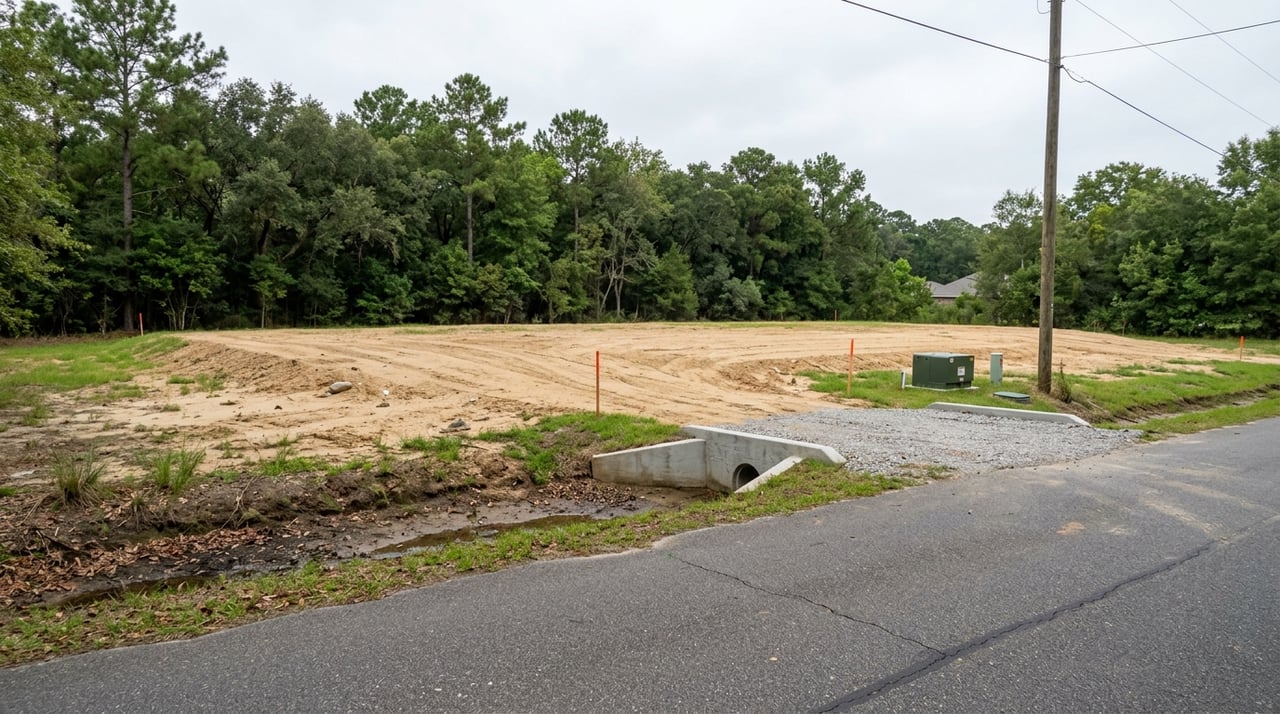
If you are looking at land along the Grand Parkway, timing matters almost as much as location. Some buyers chase headlines, but the better opportunities often come from understanding where access is already in place, where utilities can realistically follow, and where surrounding development is still being absorbed. In this guide, you will learn how to spot stronger land investment plays along SH 99, with a focus on what matters for Baytown and Harris County buyers. Let’s dive in.
Why the Grand Parkway Matters
The Grand Parkway, also known as SH 99, is a 184-mile regional loop around Greater Houston. It crosses seven counties and was built to improve mobility, ease congestion, and support long-term growth across the region. According to TxDOT project updates, major portions of the system are already operational, including Segment E, F-1, F-2, G, and the eastern H and I corridors.
That matters because land near an operating corridor is different from land near a future concept. In many areas, SH 99 is no longer a speculative story. It is now a functioning access route, and the next phase of opportunity often comes from frontage-road buildout, interchange improvements, utility expansion, and steady land absorption around existing exits.
Focus on Access First
When you evaluate land along the Grand Parkway, start with access. A parcel that sits close to SH 99 but lacks practical entry, frontage-road connection, or nearby interchange benefit may not perform like you expect. In regional transportation planning, freeways make up only about 10% of roadway mileage but carry more than 40% of daily traffic, according to H-GAC transportation materials.
That traffic concentration helps explain why land with direct or near-direct corridor access can command stronger interest than similar acreage farther away. For investors, this usually means the first question is not just, "Is it near SH 99?" It is, "How does traffic actually reach this tract, and how will that access improve over time?"
Opportunity Looks Different in Baytown and Harris County
Baytown and Harris County do not offer the same land investment profile, even though both connect to the broader Grand Parkway story. If you are exploring deals in this part of the region, it helps to separate the east side pattern from the northwest Harris County pattern.
In northwest Harris County, the corridor has been tied closely to residential expansion, retail support uses, and industrial or flex development near key interchanges. In Baytown and east Harris County, the profile leans more toward industrial and logistics-oriented land, larger tracts, and longer-term growth tied to regional access.
Northwest Harris County Signals to Watch
The strongest opportunity clusters in northwest Harris County have formed around interchanges near Cypress, Tomball, and the US 290 and US 249 corridors. The Cypress Creek Watershed Protection Plan notes that the western side of the watershed is shifting from agricultural and undeveloped land to residential and commercial uses. It also states that development of SH 99 between I-10 and US 290 greatly accelerated development in adjacent properties.
That kind of language matters because it confirms a pattern many investors look for: infrastructure first, then surrounding land absorption. The same plan also notes that commercial activity has concentrated along major transportation corridors such as SH 99, US 290, SH 249, and I-45. For land buyers, that supports the case for targeting acreage where transportation access and nearby growth are already reinforcing each other.
Residential growth supports land demand
Large-scale residential growth remains one of the biggest drivers of land absorption along parts of the corridor. A City of Houston planning report on Tuckerton Road and Bridgeland states that the surrounding area is projected to add 25,706 residents and 4,421 jobs from 2015 to 2045 across about 5,680 acres.
That report also notes that the Bridgeland Prairieland Village general plan covers about 4,018 acres. When you see that level of planned residential scale, it often points to ongoing demand for supporting land uses, including retail pads, service sites, and future commercial parcels.
Industrial and flex patterns matter too
Residential growth is only part of the picture. The Juergen Road and Grand Parkway planning material highlights the Northwest 99 Business Park General Plan north of Juergen Road, where industrial development is proposed. The report references submitted sections of about 47.94 acres and 46.99 acres, along with a 1.84-acre wastewater treatment plant plat.
This is a helpful example of what investors should look for in greenfield land. When roadway adjustments, utility infrastructure, and phased plats start lining up, the tract often becomes more viable for industrial, flex, or staged commercial development. That is usually more meaningful than a simple map pin near the parkway.
What Baytown Investors Should Watch
On the Baytown side, the Grand Parkway story is less about suburban retail pads and more about logistics, industrial movement, and tract-scale growth. The eastern H and I corridors reached substantial completion in 2022, according to TxDOT’s Grand Parkway updates. That improved regional connectivity between New Caney and Baytown and gave east-side land a clearer transportation story.
A Baytown-area economic development article describes how the opening of those segments improved access and accelerated development. The same piece cites one broker who said land east of Lake Houston that traded for as little as $5,000 per acre in the late 2010s had reached as much as $30,000 per acre by 2024, with visible growth likely to play out over the next five to 10 years.
For you as a buyer, that suggests a different underwriting mindset. In Baytown and east Harris County, the key filters are often logistics potential, utility and service access, and whether the parcel fits the region’s industrial network rather than a purely residential growth thesis.
Utilities Can Make or Break a Deal
A good location does not automatically create a good land investment. Utilities, drainage, platting, and entitlement often determine whether a tract is actually usable within your timeline and budget.
In unincorporated Harris County, there is no zoning, according to Harris County platting guidance. That can sound simple, but it does not mean every tract is easy to develop. The same county guidance explains that some sites may require an On-Site Sewage Facility subdivision planning report if they are not within a known public sewer service area, and a utility service plan may be needed to confirm how water, sewer, and drainage will be provided.
Why MUDs matter
For many land investors, a tract’s path to utility service is one of the most important underwriting questions. The Texas Commission on Environmental Quality defines a municipal utility district, or MUD, as a district formed to provide utility services to a designated area.
In practical terms, this means you should ask:
- Is the tract already served by public utilities?
- Is there an active or likely MUD path?
- Will service depend on extension capacity or private well and septic solutions?
- Is the platting path clear enough to match your hold timeline?
A parcel near SH 99 may look attractive on paper, but if utility delivery is uncertain, your risk profile changes quickly.
Baytown Has a Different Ruleset
If a property is inside Baytown, your review process should be different from one in unincorporated Harris County. The City of Baytown Planning and Zoning department states that its Unified Land Development Code is the official zoning and subdivision regulation document. The city also provides GIS tools covering zoning, utility districts, sanitation services, school districts, and future land use mapping.
That means Baytown investors should test each tract against city zoning and future land use, not just highway access. Outside the city, the focus shifts more toward ETJ considerations, platting, utilities, and drainage. In either case, the strongest deals are usually the ones where the entitlement path is clear early on.
Match the Tract Size to the Strategy
Not every tract along the Grand Parkway should be evaluated the same way. Based on the corridor patterns in the research, land opportunities often fall into three broad size bands.
- 1 to 5 acres for retail, medical, or service uses near exits and frontage roads
- 20 to 60 acres for industrial, flex, or phased commercial projects
- 100+ acres for mixed-use projects, master-planned phases, or long-term land banking
The Juergen Road planning report and east-side examples such as GrandPort 99 at 120 acres help illustrate how larger tracts can support phased development rather than a quick resale. Your ideal parcel size should match your intended use, capital structure, and expected timeline.
Expect a Multi-Year Hold in Many Cases
Land along the Grand Parkway can offer upside, but many tracts require patience. TxDOT’s Segment E overview shows that widening plans from I-10 West to US 290 are still moving through environmental decision and detailed design, with construction estimated to begin in mid-2026.
That timing is important because infrastructure and land absorption rarely move all at once. Raw land that still needs improved access, utility extension, or plat approval often takes longer to mature than land already inside an active development plan. In many cases, the most realistic hold period is measured in years, not months.
Key Risks to Underwrite Carefully
The best land investors stay disciplined about risk. Along the Grand Parkway, some of the biggest risks are highly site-specific.
Here are a few to review early:
- Floodplain and drainage conditions
- Utility availability and service timing
- Frontage-road and interchange access changes
- MUD-related costs or tax burden
- Platting requirements and ETJ oversight
- Fit with city zoning or future land use, if inside Baytown
The Cypress Creek Watershed Protection Plan also notes that floodplain effects can expand during high-rainfall events. That makes drainage review especially important in any tract-level analysis.
A Simple Way to Spot Better Opportunities
If you want a practical screening method, look for parcels where several positives line up at once. The strongest candidates often have:
- Proximity to an operating SH 99 interchange
- A realistic utility service path
- Evidence of surrounding residential, commercial, or industrial absorption
- A tract size that matches likely end use
- A clear platting or entitlement roadmap
In other words, the best opportunities are usually not just "cheap land near the Grand Parkway." They are tracts where access, infrastructure, and market demand already point in the same direction.
If you are weighing acreage, development land, or long-term investment property in the greater Houston ring, working with a team that understands land-specific due diligence can save you time and help you avoid expensive assumptions. To talk through available opportunities or get guidance on how a tract fits your goals, connect with Coldwell Banker Properties Unlimited.
FAQs
What makes Grand Parkway land valuable in Harris County?
- Land along SH 99 can become more valuable when it has strong access, nearby development activity, and a clear path to utilities, platting, and usable frontage.
How is Baytown land different from northwest Harris County land?
- Baytown and east Harris County often lean more toward industrial and logistics-oriented opportunities, while northwest Harris County has seen strong residential, retail, and flex growth near major interchanges.
Does unincorporated Harris County have zoning for land development?
- No. Harris County states that there is no zoning in unincorporated areas, but platting, utility service, drainage, ETJ review, and other development rules still apply.
Why are utilities so important for land near SH 99?
- A tract may appear well located, but without a workable plan for water, sewer, and drainage, development timelines and costs can change significantly.
What tract sizes are common for Grand Parkway land investment?
- Common patterns include 1 to 5 acres for service and retail uses, 20 to 60 acres for industrial or phased commercial projects, and 100+ acres for mixed-use or long-term land plays.
How long should you plan to hold land along the Grand Parkway?
- Many land investments along the corridor are better viewed as multi-year holds, especially if the site still needs infrastructure improvements, utility extension, or formal entitlement work.